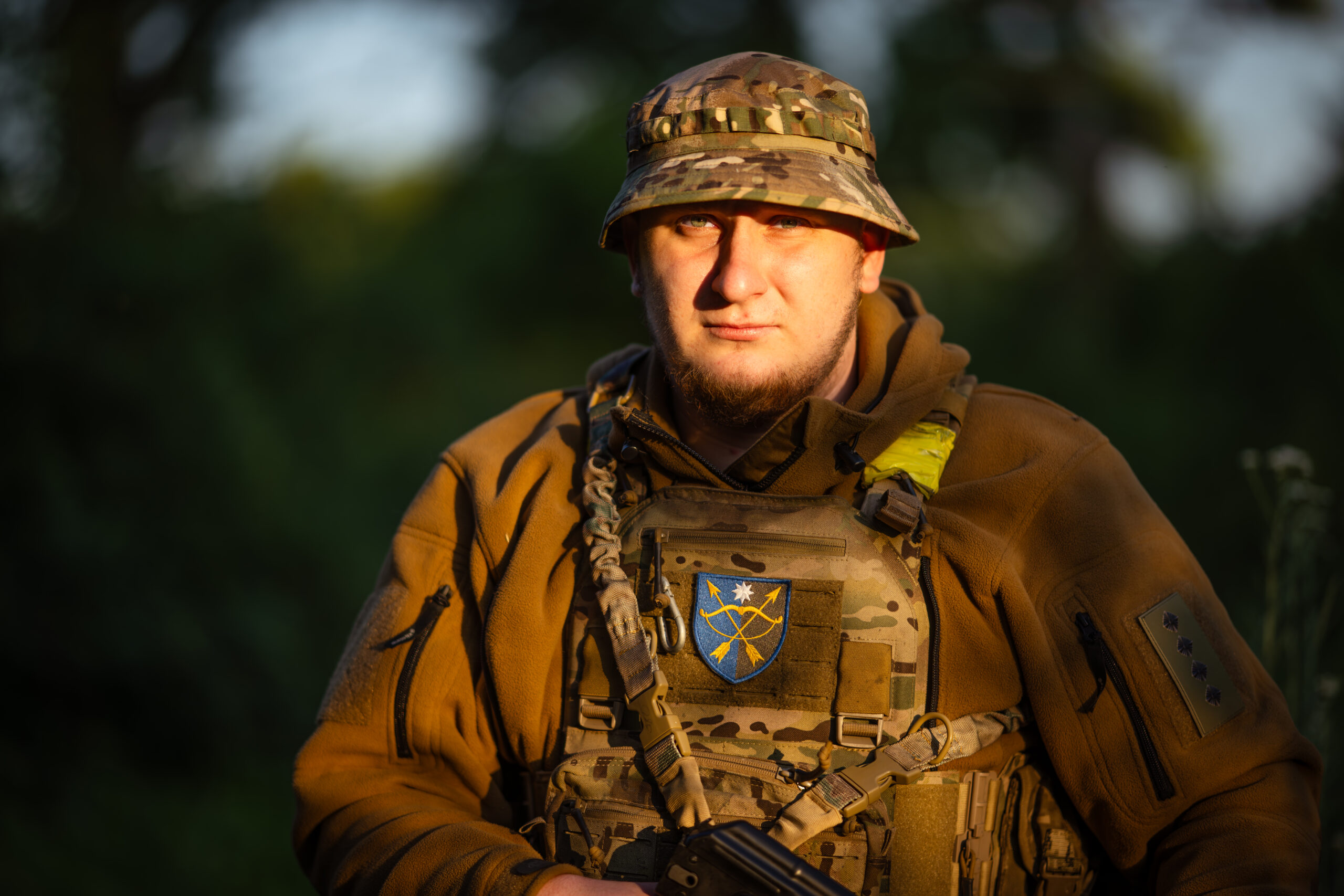
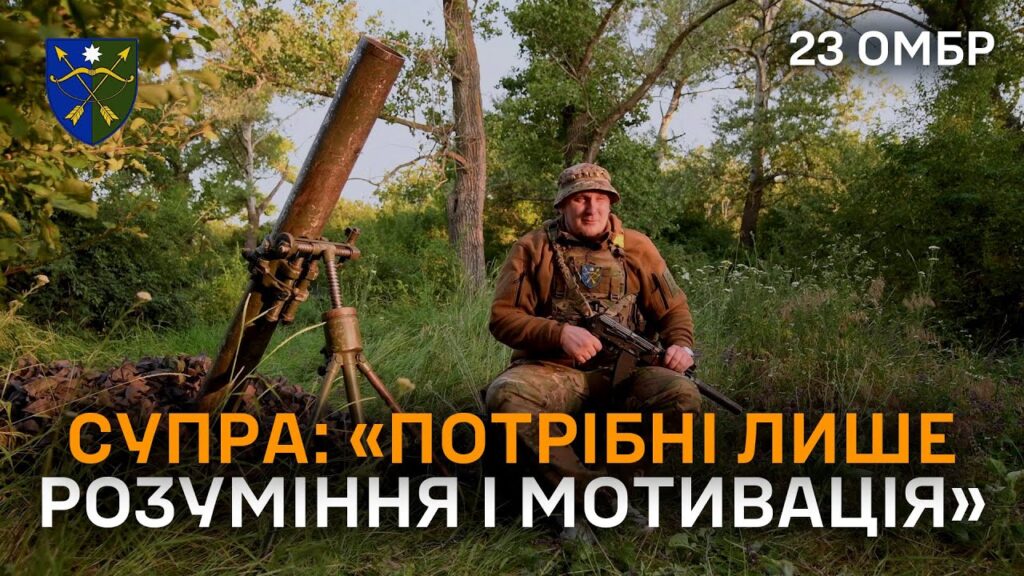
His call sign is “Supra.” He is the commander of a mortar battery in the mechanized battalion of the 23rd Mechanized Brigade. For him, joining the army was no accident. It was a decision that had been brewing for years — born of pain, anger, and deeply personal motivation.
After finishing 11th grade, at the age of eighteen, he enrolled in the Hetman Petro Sahaidachny National Army Academy. He says the motivation was strong and very clear: many of his acquaintances, friends, and godchildren were fighting in the Donetsk region, and many had died. What the Russians were doing to Ukrainian cities and people aroused in him not just outrage — but hatred. He didn’t want to stand by and watch; he wanted to take action. He wanted to prove to himself that he could become an artillery officer.
However, this decision had actually begun even earlier — around ninth grade, when he first saw the D-20 and D-30 artillery systems. That was when he realized which direction he wanted to take. From then on, everything was geared toward a single goal: finishing high school, passing the Unified State Exam, enrolling in the academy, and joining the artillery.
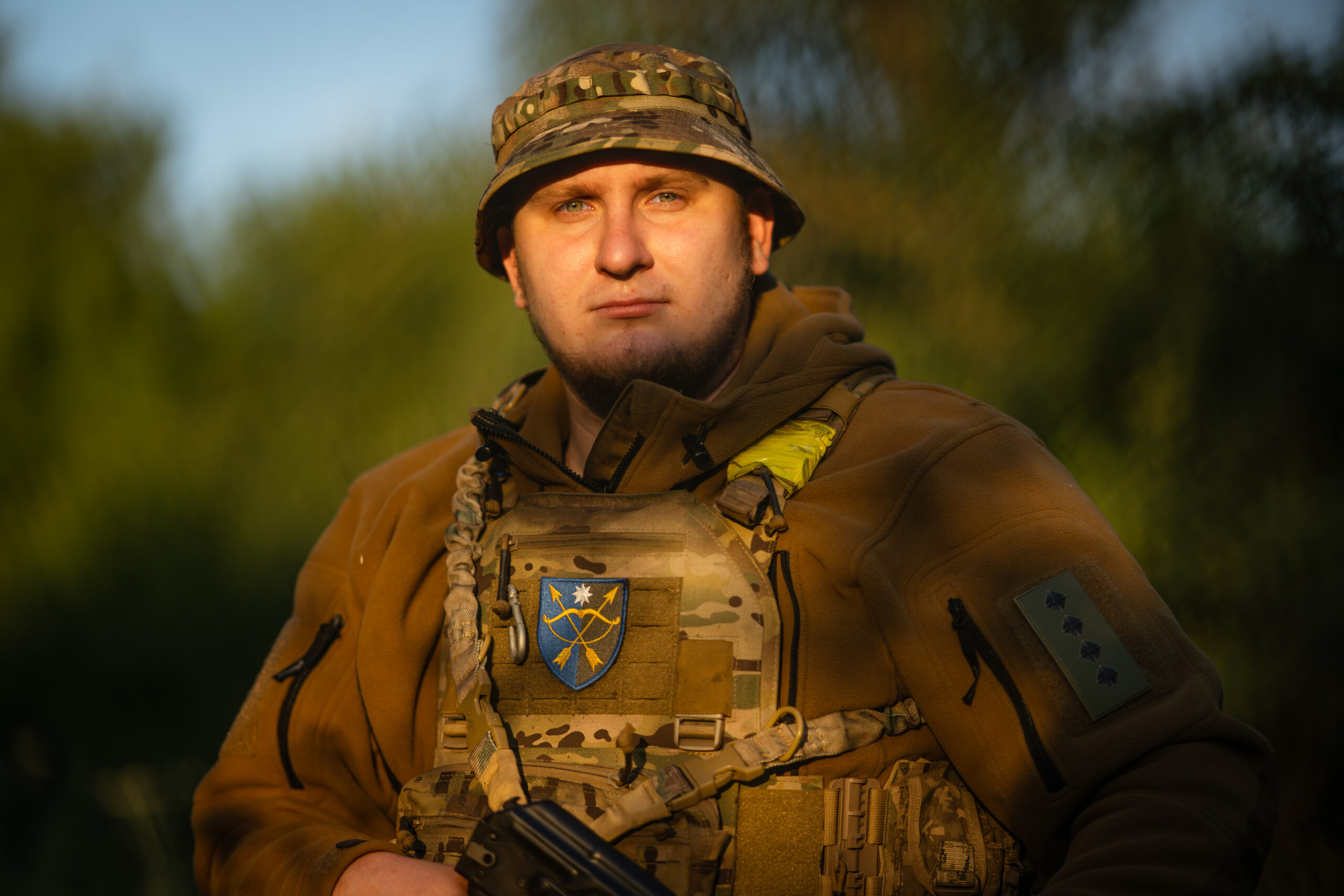
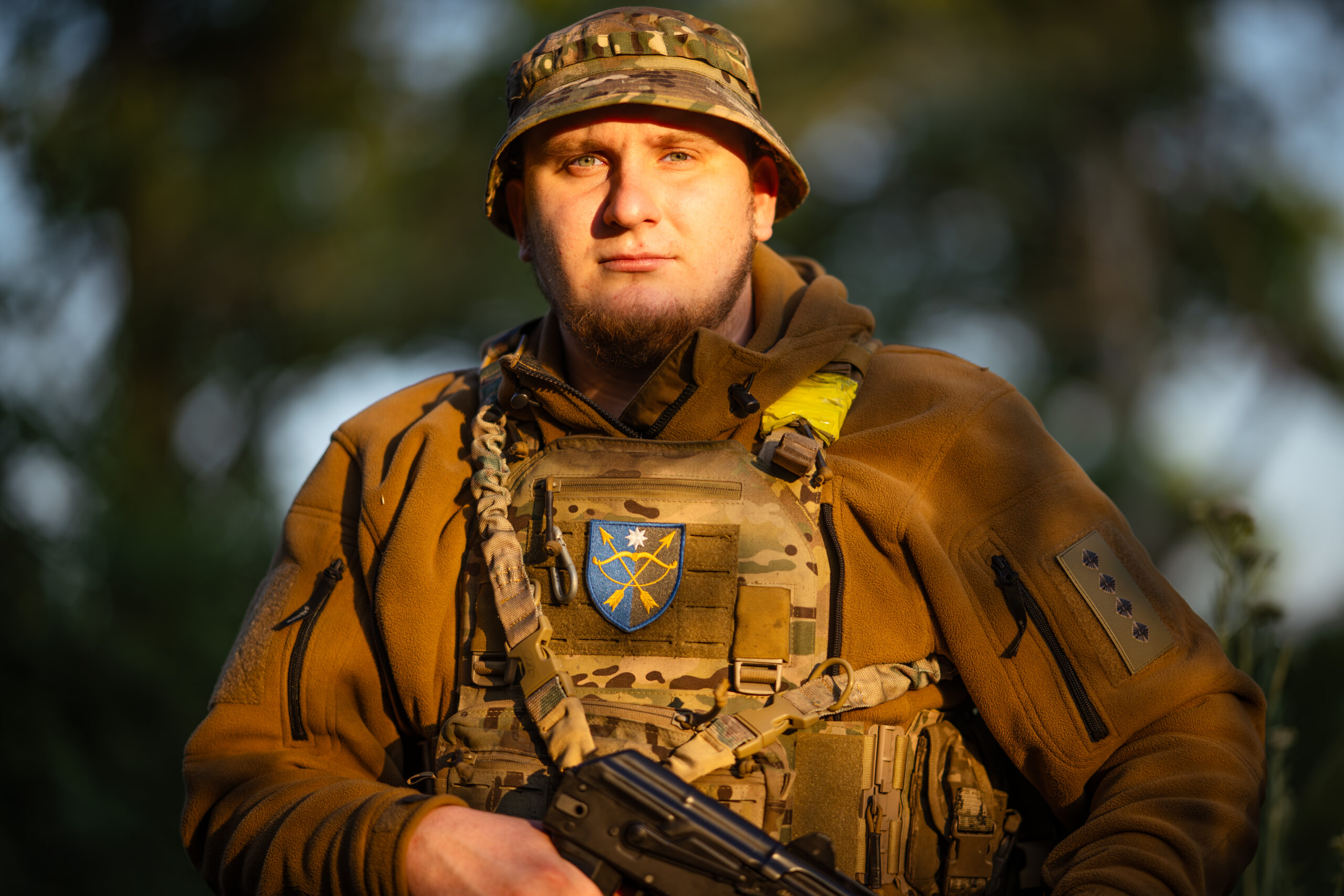
Training at the academy was no walk in the park. The first year was mostly general military training — history, math, and theoretical subjects. The second year was all about field exercises, especially in the second semester. And then came 2022.
January and early February were still relatively calm. Then came the orders, combat assignments, the formation of groups, and the assignment of roles: gunners, crew commanders, crew members, battery senior officers, and infantry. By February 24, 2022, they were in the Kyiv area.
February 27 — Kyiv Oblast, Novi and Stari Petrivtsi, actual combat. It was there that he sustained his first serious injury. After that came hospitals, prolonged treatment, and recovery. But even after being wounded, he didn’t see himself in the rear. Upon returning to the academy, he went to the dean of the faculty and said straight out: he couldn’t stay there while his men were in combat. He wanted to go back — to his comrades, to the war, to what he considered his place.
He remembers that first period of combat very clearly. They arrived by train — cold, hungry, and exhausted. They deployed, set up camp, cleaned shells, maintained self-propelled guns, stood guard, and slept in fits and starts. Everything was in motion. The first shelling is remembered as an adrenaline rush, when you don’t yet know how to react, but then comes habituation, followed by apathy.
He was assigned to the 23rd Mechanized Brigade. He looked up information about the brigade, saw that it was a strong unit, and, on top of that, some of his acquaintances were joining it. He arrived at the brigade on February 25, 2023. At first, he was a senior officer in a self-propelled artillery battery. There were live-fire exercises on the 2S1 “Gvozdika,” training, preparation, and unit formation. And after the exercises, one of the commanders told him straight out: with his knowledge, motivation, and approach, he shouldn’t be a senior officer in the battery, but the battery commander.
And that’s exactly what happened.
When talking about his current service, he focuses on the specifics: well-equipped positions, timely deployment, effective fire against the enemy, high-quality engineering preparations, and speed of operation. But above all — motivation. Without it, he is convinced, there can be no real work. But when it is there — people work, help one another, and carry out tasks quickly and effectively.
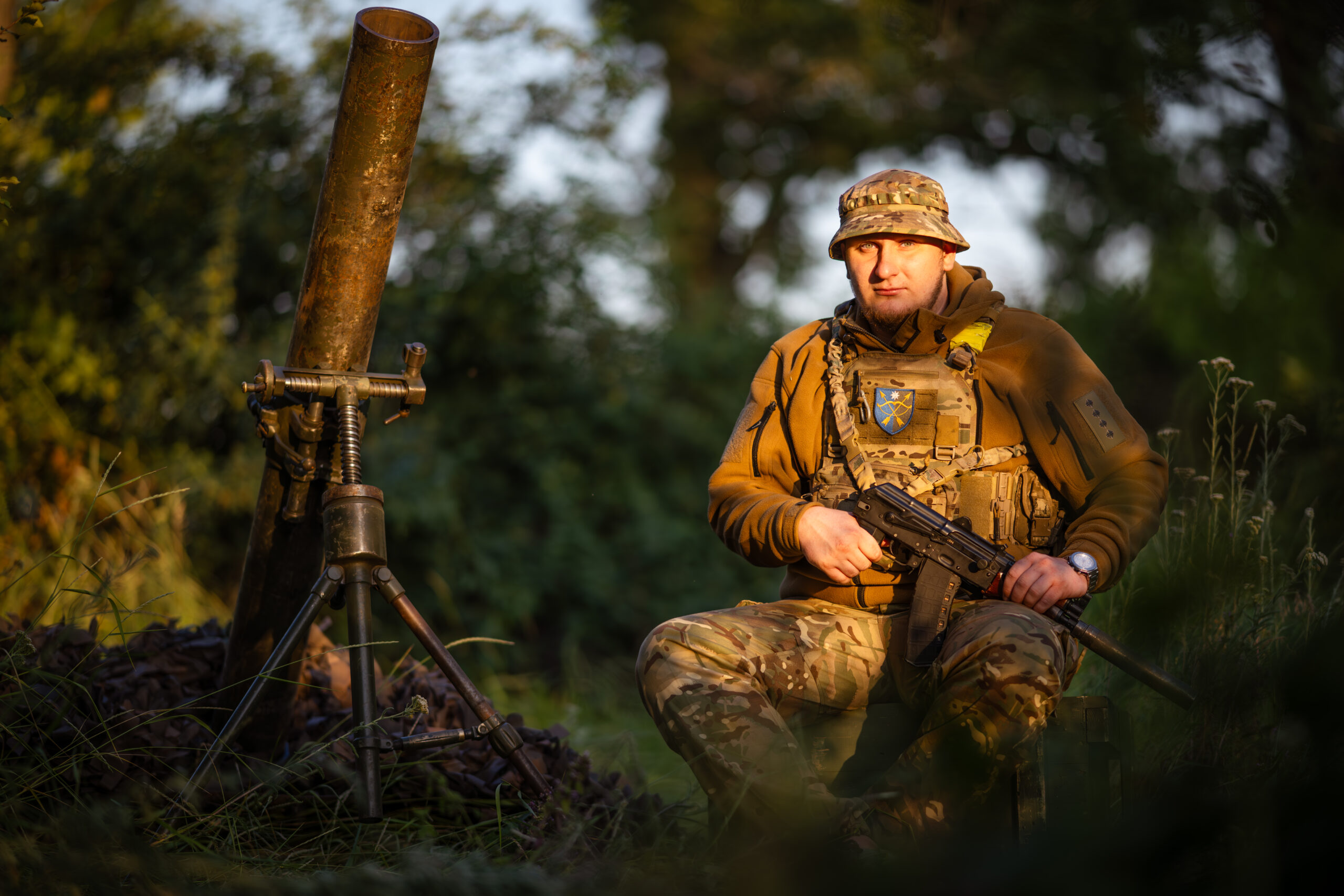
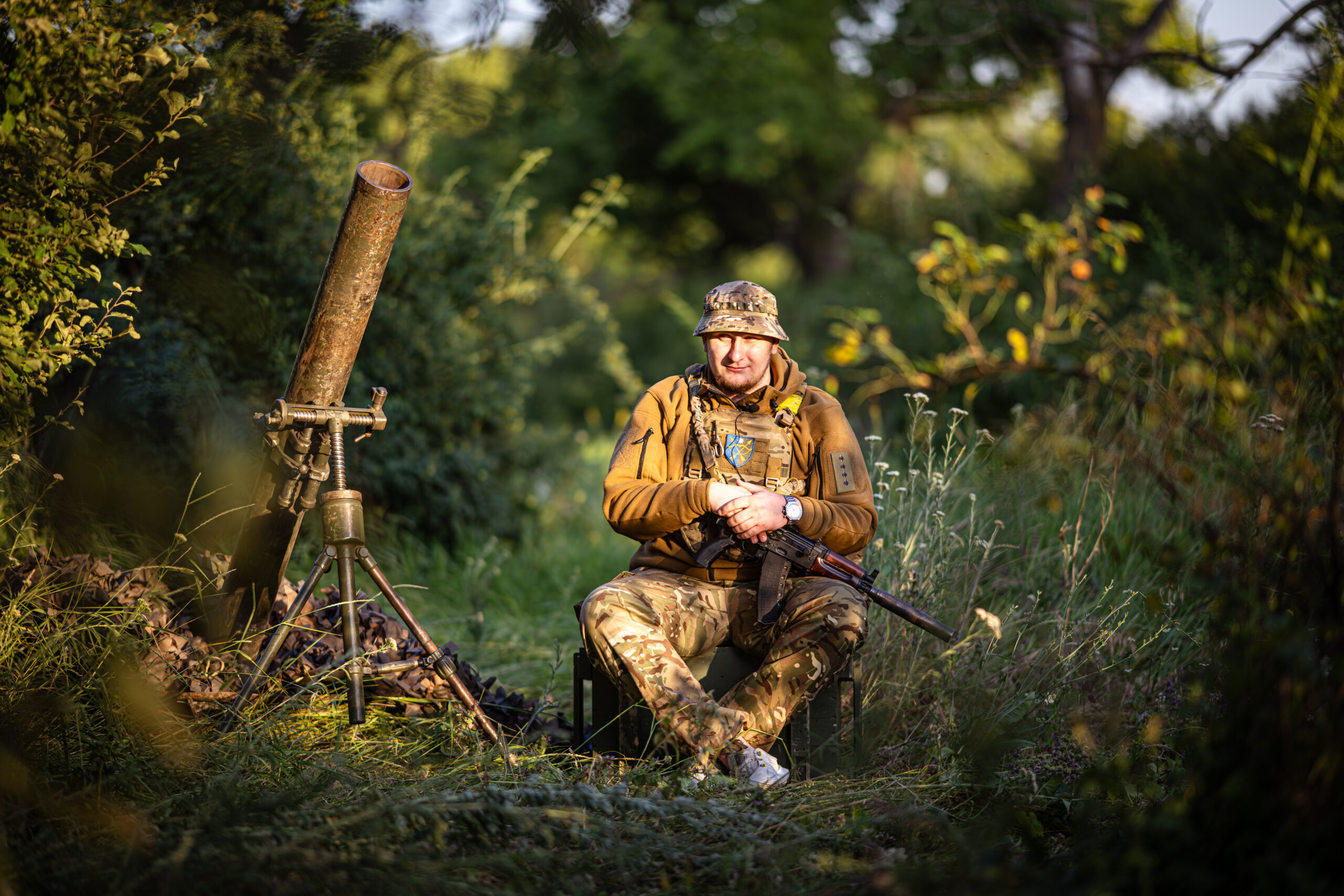
He inflicted heavy casualties on the enemy during that time. Previously, he commanded a battery equipped with M109L “Paladin” self-propelled howitzers. They operated in the Zaporizhzhia region, near Pryiutne. They targeted tanks, armored personnel carriers, and groups of occupiers. He says that the video footage may not remain, but it all stays with him. For him, destroying the enemy is not an abstract statistic, but a personal motivation. The more Russians are destroyed, the greater the chances of a Ukrainian victory.
He speaks harshly about those who shirk their duties. His attitude is negative. He believes that every healthy and able-bodied man must follow this path. At the same time, he adds: those who aren’t fighting must also work toward victory — by providing drones, money, vehicles, logistics, and supplies. Because there are those who at least help. And then there are those who, in his words, “need nothing.”
He also speaks specifically about young people after high school. Whether to enroll in a military academy or not is a decision each person must make for themselves. But being an officer isn’t about a nice uniform or a rank. It’s a huge responsibility. An officer must be able to work with people, logistics, and equipment; to think, monitor, and worry about every soldier every day and every second. When there are forty to fifty people in a battery, it’s not just about command — it’s about constant responsibility for lives, decisions, and outcomes.
He doesn’t romanticize the training. He says bluntly: much of what was taught in his first year at the academy was already outdated back then. It was only later that they began to take greater account of real combat experience, modern equipment, field exercises, maps, and new approaches. They fired from the UPIK-82, D-30, D-20, MT-12, and a 100-mm smoothbore anti-tank gun. They trained at firing ranges, experimented, and gained real-world experience. It was precisely this, he says, that drove him to become better.
His story is the story of a man who joined the army neither by chance nor out of romanticism. It is a story of motivation born of personal pain, loss, hatred for the enemy, and the desire to be stronger. Not to stand on the sidelines. Not to wait. But to act.
And today, that is exactly what he is doing. He works. He commands. He fights. And every day, he proves that motivation is also a weapon.