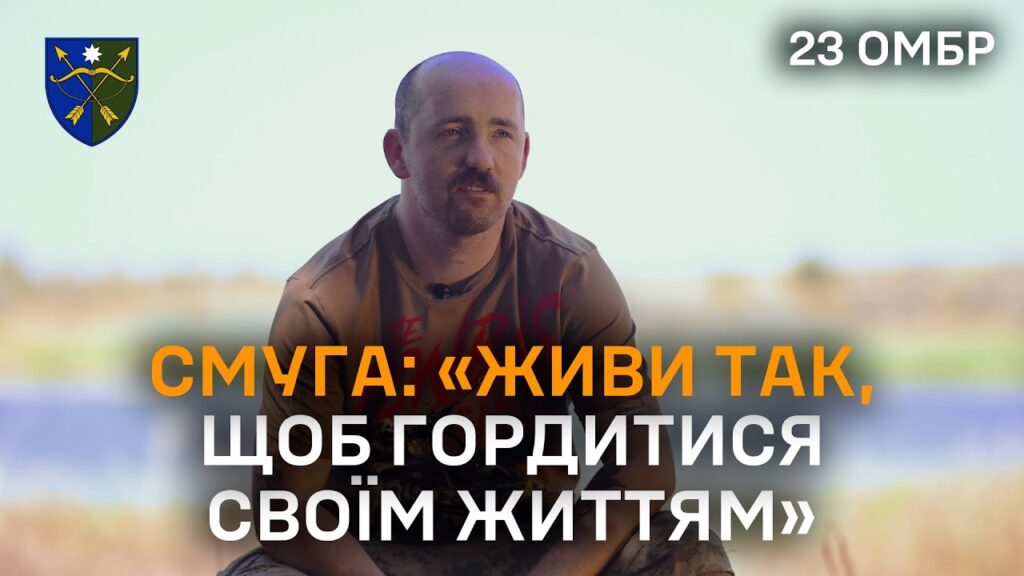
Dmytro Smaglyi, call sign “Smuga,” is a second lieutenant and commander of a motorized infantry company in the motorized infantry battalion of the 23rd Mechanized Brigade. This unit was previously known as the 426th Separate Rifle Battalion. His personal story is that of a man whom the war did not merely catch up with, but forced to return again and again to where it all began: to the Donetsk region, to his native land, to battle.
He was born in Svyatogorsk, in the Sloviansk district of Donetsk Oblast. His hometown is the village of Zaitseve, near Bakhmut. Before the war, Dmytro had chosen a completely different path for himself — aviation. He graduated from the Sloviansk Aviation Technical School, worked at Donetsk Airport, and later studied at Kozhedub to advance his qualifications to become an engineer. It was there that the war began. And for him, this war did not start in 2014, but even earlier — in Crimea, in 2013.
Then his life took a sharp turn. Because he was from the Donetsk region, the airports were closed to him — they had become military facilities. He had to work in other fields: in manufacturing, in the culinary arts, as a baker, a pastry chef, and later as a sous-chef. It was in this role, in Bakhmut, that he faced the full-scale invasion.
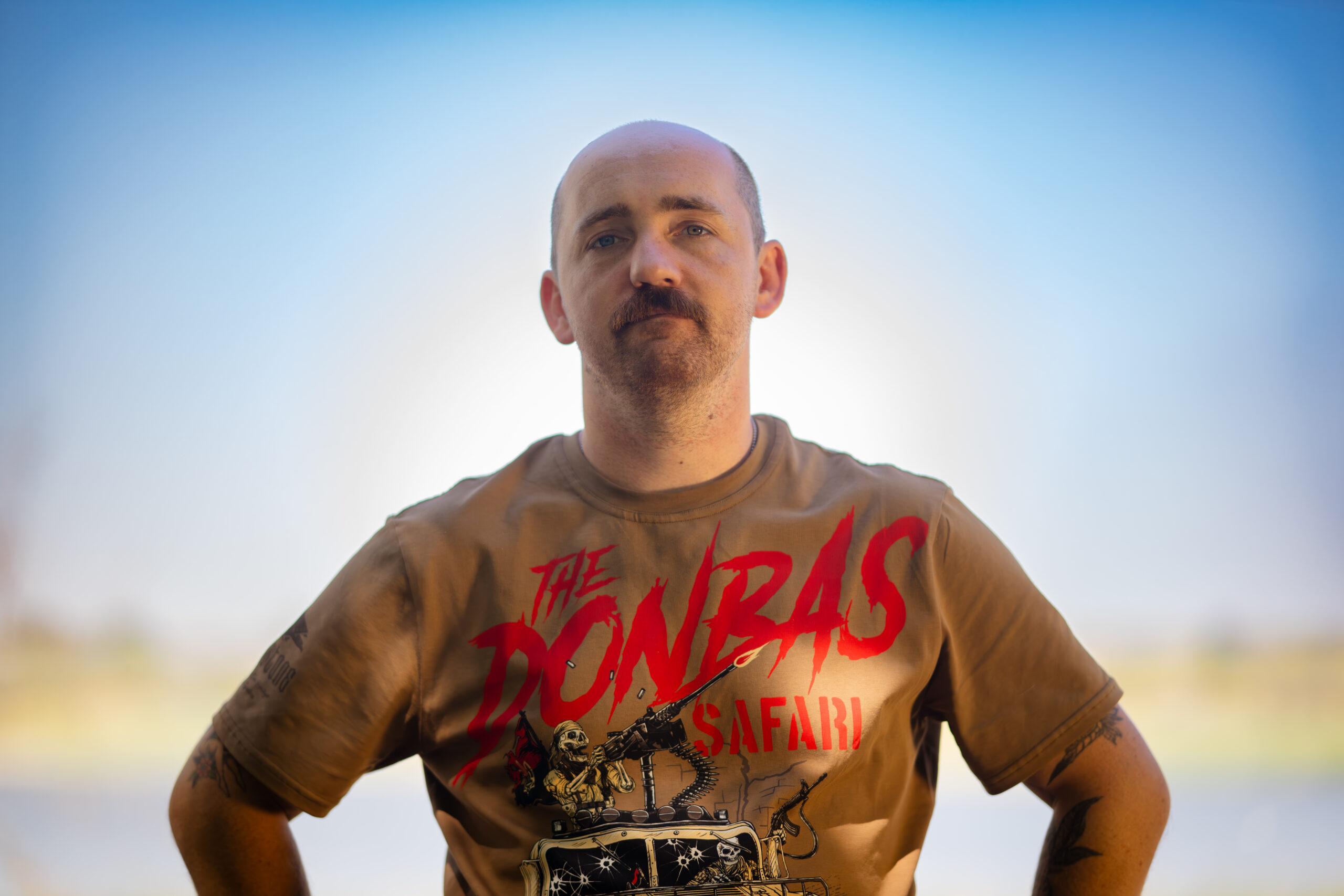
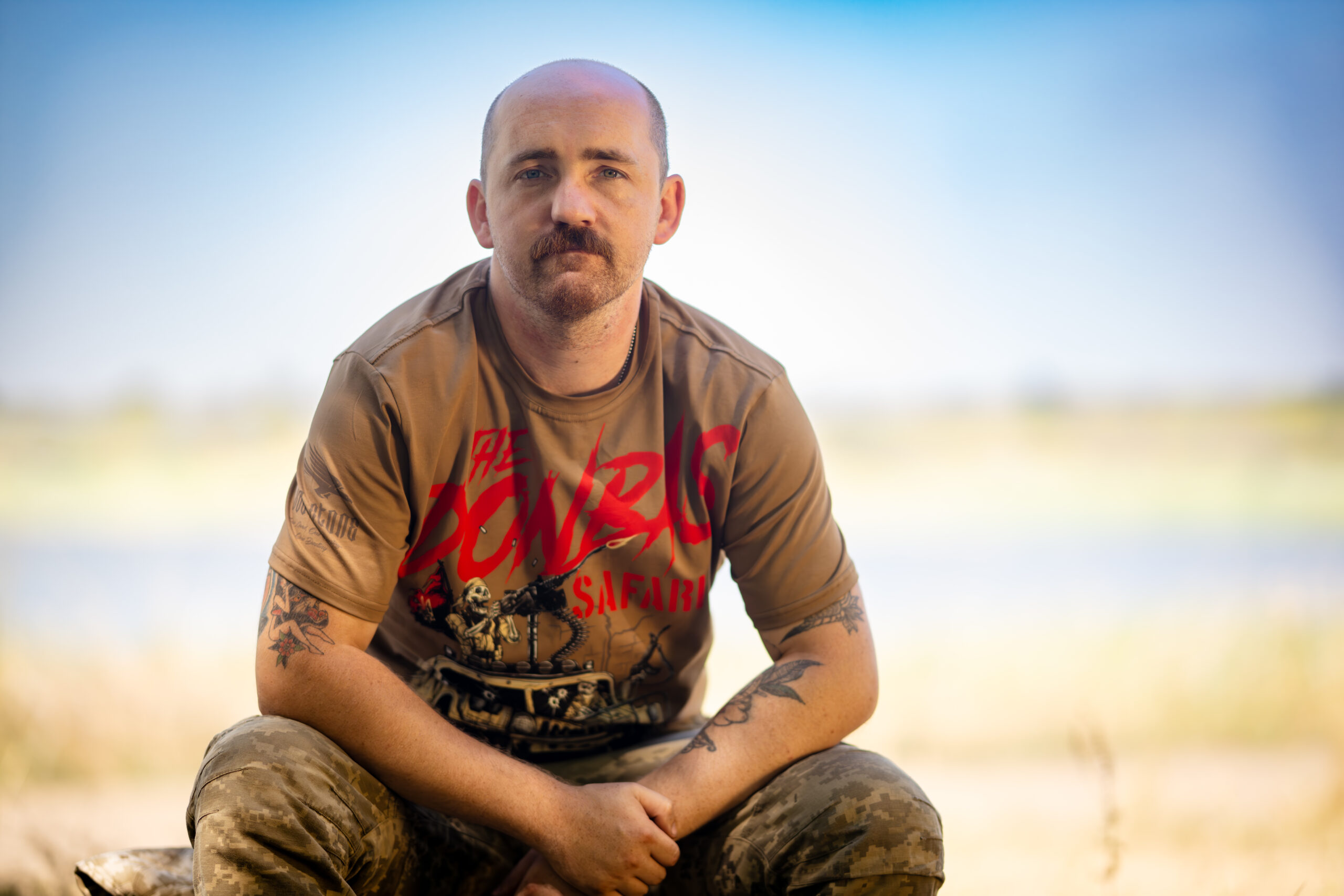
Dmytro joined the military after evacuating his family from Sviatohirsk and enduring the occupation himself — for over 120 days. Following the liberation of the Izium region, he decided to enlist in the Armed Forces of Ukraine. This was in late 2022 and early 2023. In February 2023, he was assigned to the 426th Separate Rifle Battalion — a battalion from the Donetsk region formed in Pokrovsk to close the most dangerous gaps between brigades on the front lines.
Within just a few months, the battalion found itself near Bakhmut — essentially in Dmytro’s hometown. Bakhmut, Klishchiivka, Ivanivske, Chasiv Yar — there, the 426th fought alongside various units: the 5th Assault Brigade, the 79th, the 67th Brigade, “Aidar,” and the 110th. Later — Velyka Novosilka, Kurakhove, Yelyzavetivka. The battalion managed to fight across many fronts and endure heavy battles until May 31, 2025, when it ceased to exist in its old form and became the motorized infantry battalion of the 23rd Brigade.
Dmytro himself started out as a private. He worked as an assistant to the head of the department, handling logistics and technical processes, and was quite adept with computers, paperwork, and record-keeping. He rose from private to senior private, and later seized an opportunity: he enrolled in training courses, began his studies in February 2025, and by April had returned as a second lieutenant and platoon commander.
Straight from training to the front lines. Defending the approaches to the village of Odradne. He stayed there until the end of May. There were battles, prisoners, injuries, concussions, shrapnel. But he speaks of this briefly, almost matter-of-factly. For him, what matters most is something else: the work, the people around him, the tasks that need to be accomplished.
His first real combat deployment as an officer lasted 30 days. Prior to that, his duties had been mainly logistical — near Chasov Yar and in Ivanivske. But in 2025, a different kind of war began — one of assaults, close-quarters combat, and exhaustion. An observation post in the field between Rozliv, Rozdolne, and Odradne. Fire support, which later turned into defending the village. Russian motorcycle assaults across the tank trench, FPV, drones, artillery, mortars, and tanks. Prisoners of war, who were later exchanged for our own. Fallen comrades, among them a master sergeant with the call sign “Stirlitz,” who died in those woods.
His frontline isn’t a single heroic moment, but a long, arduous journey. Evacuating the wounded, holding the sector, bringing people into position, and getting them out again. Working in Odradne, near Komar, in the village of Zaporizhzhia — places where the enemy had massed and where the Russians’ summer counteroffensive made the fighting particularly brutal. And seeing the territory for which they paid with blood fall back into enemy hands. He puts it simply: “And that’s very sad.”
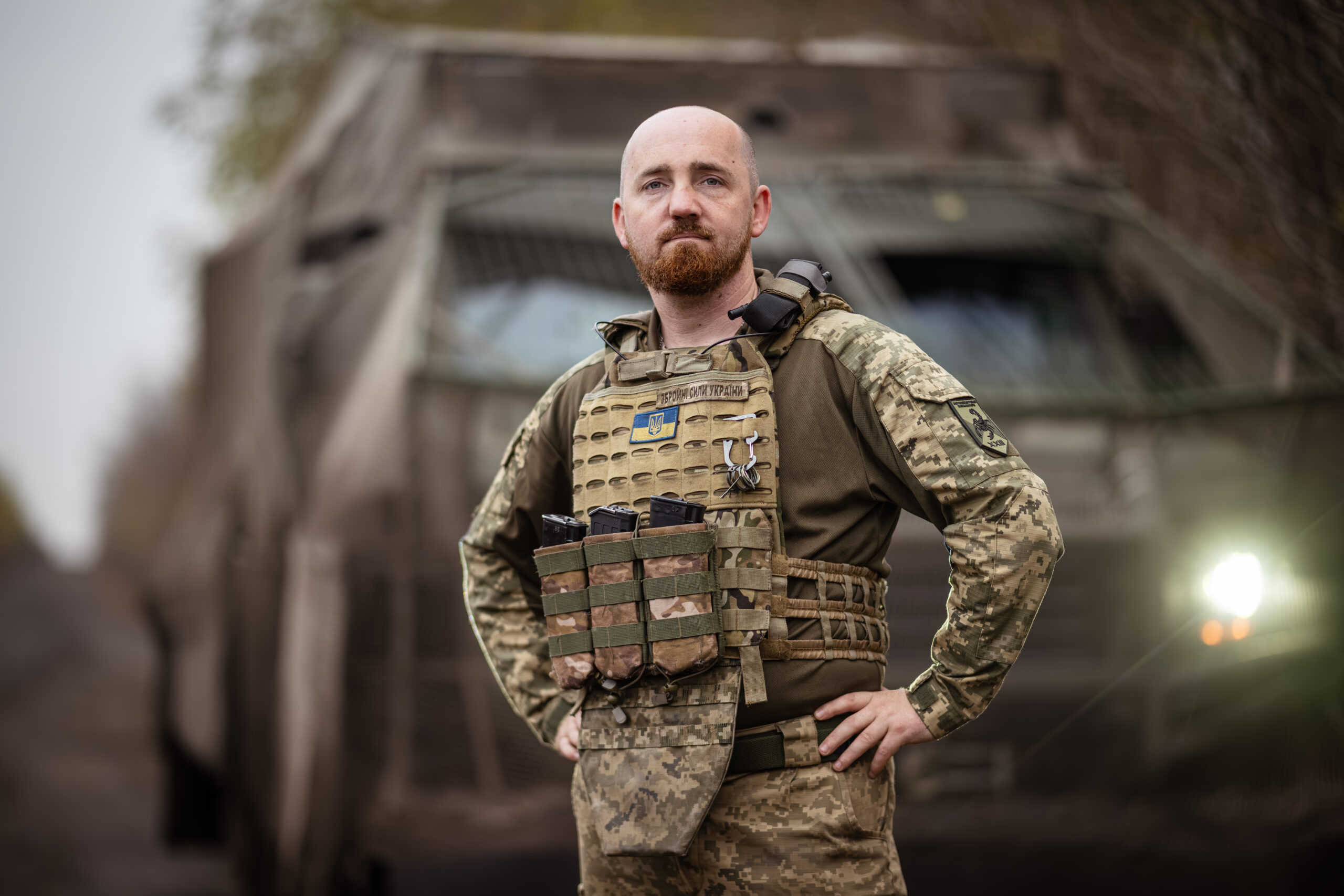
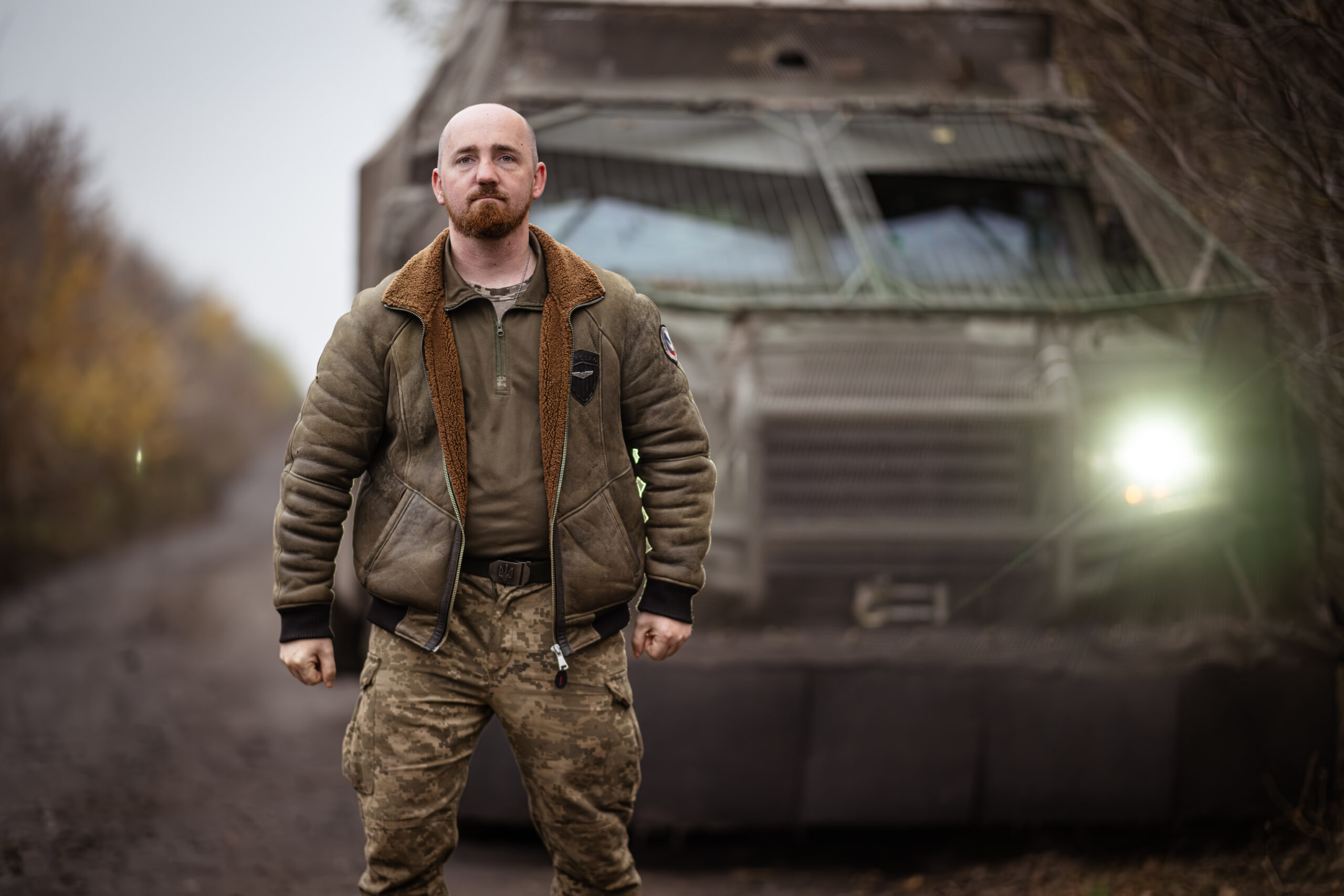
His words contain a harsh, frontline truth. He speaks of mobilization, of people who don’t understand why they should go to war, of a state that doesn’t always recognize a specialist in a person, and of those who could be put to use in their field but are instead thrown into the general fray. He also speaks of the need for women in the military, the shortage of administrative staff, the artificial complexity of certifying “drone operators,” and the fact that the future lies in automation, drones, and systematic training. But above all this stands his one guiding principle: motivation must be personal.
“You have to go for yourself. For your family. So that you can be proud of your own life.”
Dmytro doesn’t idealize the army. He doesn’t romanticize war. He talks about it like someone who has seen far too much. He says the army has become his life. That almost all his friends have been killed. That he no longer has a family left in the country. That he has such a close bond with the army — so close, in fact, that he no longer wants to leave it.
In this directness and toughness lies his truth. The truth of a man from Donetsk Oblast who survived the occupation, returned to fight for his homeland, and continues to fight not for abstract ideals, but for meaning. So that one day he can honestly say to himself: “I did not live this life in vain.”